

Music Instrument Names: A Complete List with Pictures
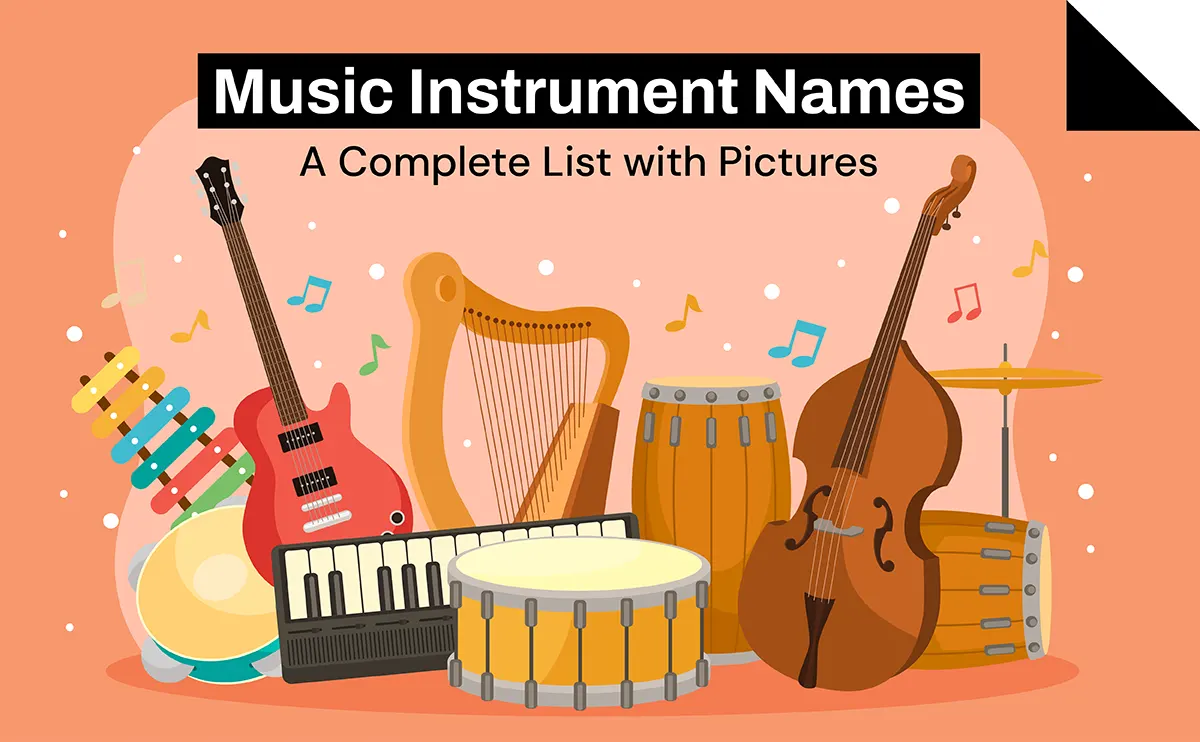
Music is everywhere! From the catchy tunes on your playlist to the background music in films, instruments create the sounds we love. Learning about music instruments name opens up a whole new world of creativity and culture. Whether you’re a student working on a project, a music lover curious about different sounds, or someone dreaming of learning to play, this guide has everything you need. Musical instrument names tell stories from around the world. They connect us to different cultures and traditions. Get ready to explore over 100 amazing instruments that make our world more musical and exciting!
List of 100+ Musical Instruments Names in English
Here’s a comprehensive table of Music Instrument Names in English you should know:
| String Instruments | Wind Instruments | Percussion Instruments | Keyboard Instruments |
| Guitar | Flute | Drums | Piano |
| Violin | Trumpet | Tabla | Organ |
| Cello | Saxophone | Cymbals | Keyboard |
| Bass | Clarinet | Xylophone | Accordion |
| Harp | Oboe | Tambourine | Harmonium |
| Banjo | Tuba | Maracas | Synthesiser |
| Mandolin | French Horn | Triangle | Harpsichord |
| Sitar | Recorder | Bells | Electric Piano |
| Ukulele | Bagpipes | Gong | |
| Double Bass | Piccolo | Bongos |
| Electronic Instruments | Traditional Instruments | Unusual Instruments |
| Electric Guitar | Didgeridoo | Theremin |
| Drum Machine | Djembe | Glass Harmonica |
| Sampler | Kalimba | Hang Drum |
| Turntables | Ocarina | Cajón |
| Synthesiser | Wooden Flute | Rainmaker |
| Electric Violin | Conch Shell | Singing Bowl |
| Bass Guitar | Jaw Harp | Handpan |
| Keyboard | Bamboo Flute | Waterphone |
This list includes instruments from different cultures and time periods. Some are ancient, like the flute. Others are modern, like the synthesiser. Each music instruments name creates unique sounds that add colour to music. Learning their names helps you understand music better and appreciate the variety of sounds around us. This comprehensive musical instruments names with pictures guide helps students and music lovers identify instruments easily.

Types of Musical Instruments Names
Musical instruments are grouped into different families based on how they make sound. Understanding these groups makes learning about music instruments name much easier.
String Instruments: These instruments make sound when strings vibrate. You can pluck, bow, or strike the strings. Examples include:
- Guitar (plucked with fingers or pick)
- Violin (played with a bow)
- Piano (strings hit by hammers)
- Harp (strings plucked with fingers)
Wind Instruments: These create sound when air flows through them. They’re divided into two types:
- Woodwinds: Flute, clarinet, saxophone, recorder
- Brass: Trumpet, tuba, French horn, trombone
Percussion Instruments: These make sound when you hit, shake, or scrape them. Examples include:
- Drums (hit with sticks or hands)
- Cymbals (crashed together)
- Tambourine (shaken or hit)
- Triangle (struck with a metal rod)
Keyboard Instruments These have keys that you press to make sound. The keys control how sound is produced:
- Piano (keys trigger hammers)
- Organ (keys control air flow)
- Synthesiser (keys trigger electronic sounds)
Electronic Instruments These use electricity to create or amplify sound:
- Electric guitar
- Keyboard synthesiser
- Drum machine
- Sampler
Each type has its own special sound and playing technique. Musicians often specialise in one type but may learn others too. Understanding these groups helps you recognise music instruments name in songs and choose which ones interest you most. This knowledge forms the foundation for building your list of music instrument names in English.
Also Learn: Shapes Name with Pictures
Detailed List of Musical Instruments Names
Here are 10 musical instrument name with detailed information:
| Instrument | Type | Description |
| Guitar | String | Most popular instrument worldwide. Has 6 strings. Used in rock, pop, classical, and folk music. Easy to learn basics. |
| Piano | Keyboard | Has 88 keys (52 white, 36 black). Called “king of instruments” because it can play melody and harmony together. |
| Drums | Percussion | Set includes bass drum, snare drum, hi-hat, and cymbals. Keeps rhythm in most music styles. Very energetic to play. |
| Violin | String | Smallest string instrument in orchestra. Makes beautiful, expressive sounds. Requires bow technique and precise finger placement. |
| Flute | Wind | Made of metal, wood, or plastic. Creates pure, clear tones. One of oldest instruments in human history. |
| Saxophone | Wind | Invented in 1840s. Popular in jazz, blues, and rock music. Has curved metal body with many keys. |
| Trumpet | Wind | Made of brass with three valves. Creates bright, powerful sound. Used in orchestras, jazz bands, and marching bands. |
| Keyboard | Electronic | Modern version of piano. Can sound like many different instruments. Portable and perfect for beginners. |
| Cello | String | Larger than violin, played sitting down. Creates rich, deep tones. Important in classical music and film soundtracks. |
| Harmonica | Wind | Small, portable instrument you blow into. Popular in folk, blues, and country music. Very affordable and easy to start. |
Each music instruments name has its own personality and sound. Some are loud and energetic, others are soft and gentle. The best instrument for you depends on your musical taste and physical comfort. Learning about different music instruments name helps you make informed choices about which ones to explore.
Indian Musical Instruments Names List
India has a rich musical tradition with unique instruments. This indian musical instruments list showcases the country’s diverse musical heritage:
- Sitar – Long-necked string instrument with 20 strings. Famous for its distinctive sound in classical Indian music. Takes years to master properly.
- Tabla – Pair of hand drums. Right drum is called “dayan,” the left drum is called “bayan.” Creates complex rhythms in Indian music.
- Harmonium – Keyboard instrument with bellows. Pumps air through reeds to create sound. Popular in devotional and classical music.
- Shehnai – Double-reed wind instrument. Made from wood with metal flare. Played at weddings and religious ceremonies.
- Sarangi – Short-necked string instrument. Played with a bow made from horsehair. Creates vocal-like sounds.
- Mridangam – Barrel-shaped drum from South India. Made from jackfruit wood. Played with both hands using different techniques.
- Veena – Ancient string instrument. Has a large gourd resonator. Considered sacred in Hindu tradition.
- Bansuri – Bamboo flute with six or seven holes. Creates peaceful, meditative sounds. Associated with Lord Krishna.
- Dhol – Large double-headed drum. Played with sticks. Popular in folk dances and celebrations.
- Santoor – Hammered dulcimer with 72 strings. Played with light wooden hammers. Popular in Kashmir.
- Manjira – Small metal cymbals. Played by striking together. Used in folk and devotional music.
- Ektara – Single-string instrument. Simple but expressive. Used by wandering musicians and in folk songs.
These instruments reflect India’s diverse musical heritage. Each region has its own special instruments and playing styles. Understanding music instruments name from different cultures broadens your musical knowledge and appreciation. Every music instruments name in this traditional collection has deep cultural significance and unique sound characteristics.
Also Learn: Tongue Twisters in English For Kids
Interesting Facts about Musical Instruments
Here are some amazing facts that will surprise you about music instruments name:
- The piano has over 12,000 parts and takes nearly a year to build by hand.
- A violin bow uses about 150 horse hairs from white horses’ tails.
- The saxophone was invented by a Belgian instrument maker named Adolphe Sax in 1846.
- The didgeridoo from Australia is one of the world’s oldest wind instruments, dating back 40,000 years.
- Electric guitars don’t need amplifiers to make sound, but you can barely hear them without one.
- The largest piano ever built was 18 feet long and weighed 1.4 tonnes.
- A full drum kit can have over 20 different pieces including drums, cymbals, and accessories.
- The human voice is technically a wind instrument because it uses air to create sound.
- Some violins are worth millions of pounds and are hundreds of years old.
- The glass harmonica was invented by Benjamin Franklin and creates sound from spinning glass bowls.
- Modern synthesisers can recreate the sound of almost any music instruments name or create completely new sounds.
- The hang drum was invented in Switzerland in 2000 and creates mystical, bell-like tones. Learning about different music instruments name helps you discover fascinating stories behind each one.
FAQs
What’s the easiest instrument to learn?
Ukulele, keyboard, and recorder are great for beginners. They’re affordable and you can play simple songs quickly.
Which instrument is best for small children?
Recorder, small keyboard, or ukulele work well. They’re lightweight and don’t require complex finger positions.
Can I learn instruments online?
Yes! Many apps and websites offer lessons. However, getting some guidance from a teacher helps with proper technique.
How long does it take to learn an instrument?
You can play simple songs in a few weeks. Getting really good takes years of practice, but it’s fun from the start! Remember, every music instruments name requires different amounts of time to master.
