

Smart Ways to Identify Important Topics Using CBSE Class 12 Question Banks
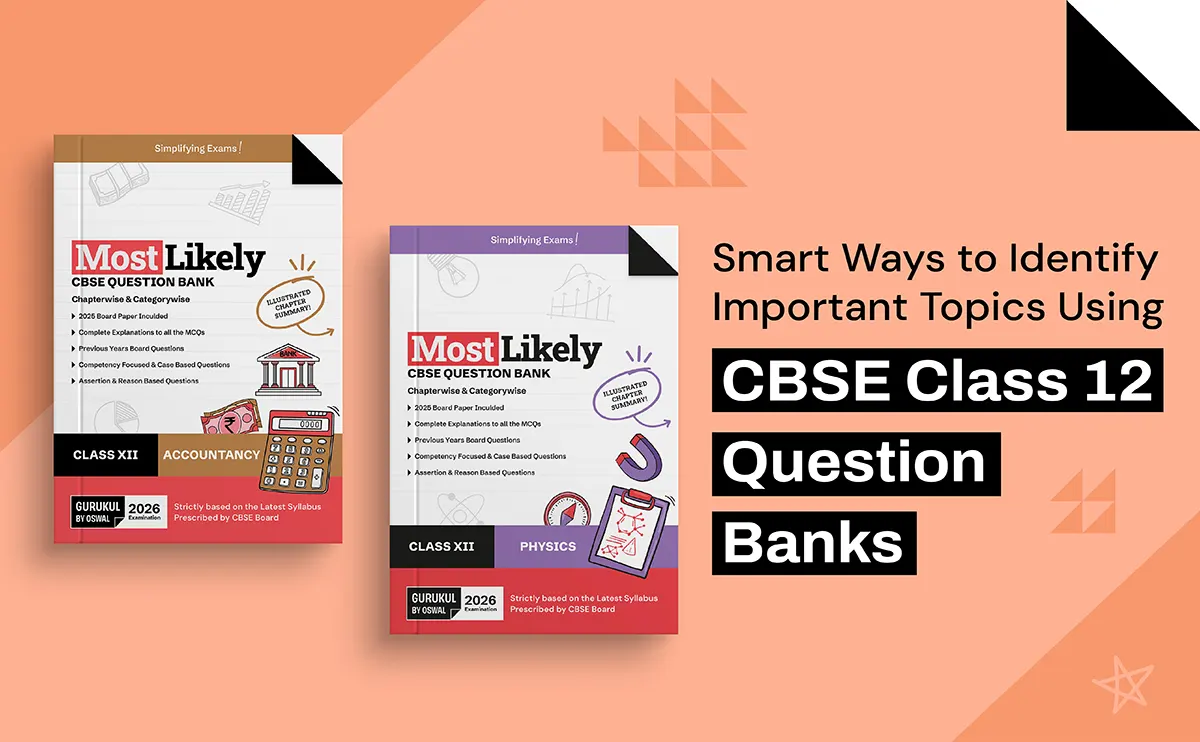
Let’s be real, Class 12 CBSE boards are intense. The pressure is on: there’s the weight of school tests, projects, tuitions, and the looming board exams. Most days feel like a race against time, with multiple subjects and endless chapters competing for your attention. In the middle of this chaos, the one thing that truly helps you stay on track is focusing on what matters most. That’s where the CBSE Class 12 Question Banks come into play. They are your not-so-secret map to top-scoring topics.
In this practical guide, I’ll walk you through exactly how to Identify Important Topics Using CBSE Class 12 Question Banks, so you can study effectively and confidently without burning out.
Understanding CBSE Class 12 Question Banks
Before we Identify Important Topics Using CBSE Class 12 Question Banks, you need to understand what they really are. Question banks are collections of exam questions i.e. past papers, sample sets, mock tests. They are all grouped by chapters or years and closely aligned with the CBSE syllabus. They are usually designed to reflect the marking scheme, so you get a good idea of what board examiners are looking for.
Types of Question Banks:
- Chapter-wise: Each chapter from your NCERT is covered separately, making targeted revision easy.
- Year-wise: Questions are organised by exam years making it handy for spotting patterns quickly.
- Mixed or Full-Length: Simulates actual exam conditions by testing across chapters in a single paper.
Why they are useful:
- NCERT-linked: They stick to your textbooks, so you’re not spending time on irrelevant topics.
- Aligned with the marking scheme: You get a feel for how many marks come from each type of question.
- Reveal repeats: Frequently asked questions or concepts give clues on what boards love testing.
- Answer practice: Helps you write in the exact style examiners expect.
Example: Imagine you’re studying “Electrochemistry” in Chemistry. Your Class 12 Question Bank shows it appears in almost every board paper for the last decade. With that knowledge, you know to dedicate extra time here instead of spreading energy thinly across less frequent topics.
The Importance of the Question Banks CBSE Class 12 is that they give you insights that can help you predict, prepare, and perform better in your boards.
Why Identifying Important Topics Matters?
If you don’t Identify Important Topics Using CBSE Class 12 Question Banks, you risk spending weeks on topics that might only carry a couple of marks. That’s not the most effective way to prepare, especially when time is limited.
1. Better Time Management
When you know where the big marks are, you can focus your study sessions on those chapters first and avoid last-minute panic.
2. Greater Marks with Less Stress
Identify Important Topics Using CBSE Class 12 Question Banks to secure high-weightage areas before moving to smaller ones. This way, your base score is already strong, even before touching lighter chapters.
3. Confidence Booster
Studying with this targeted approach means you walk into the exam hall knowing you’ve prepared what’s most likely to come.
Mini Case Study: A student preparing for Biology found that “Human Reproduction” and “Molecular Basis of Inheritance” together covered over 20 marks. By focusing there first, and then moving to smaller chapters, they secured a strong foundation early. Using a Class 12 Question Bank for this kind of insight ensures you put energy where it counts most.
Smart Ways to Identify Important Topics
Let’s break down five ways to Identify Important Topics Using CBSE Class 12 Question Banks so you can create a focused revision plan.
1. Trend Analysis / Spot the Patterns
What to do:
- Review the last 5–10 years of exam questions in your Question Bank.
- Highlight topics that appear most years.
- Track whether numericals, definitions, or long answers repeat often.
Example Table: Physics (Past 5 Years)
| Topic | 2020 | 2021 | 2022 | 2023 | 2024 | Hits |
| Electrostatics | ✔ | ✔ | ✔ | ✔ | ✔ | 5/5 |
| Current Electricity | ✔ | ✔ | ✔ | ✔ | ✘ | 4/5 |
| Communication Systems | ✘ | ✔ | ✘ | ✘ | ✔ | 2/5 |
Takeaway: When you Identify Important Topics Using CBSE Class 12 Question Banks this way, you find the “hot” chapters that almost never fail to appear.
2. Check Chapter Weightage
Chapter weightage is a direct clue. Use the CBSE blueprint or your Question Bank’s chart to guide you.
Example Table: Chemistry Weightage
| Chapter | Marks |
| p-Block Elements | 8 |
| Electrochemistry | 7 |
| Chemical Kinetics | 5 |
| Surface Chemistry | 4 |
| Biomolecules | 3 |
By pairing chapter weightage with trend analysis, you Identify Important Topics Using CBSE Class 12 Question Banks more accurately.
3. Group by Question Types
Not all topics are tested the same way. Some carry 1 mark, others 5 marks.
Steps:
- Sort your Question Bank by question type.
- Look for topics with frequent high-mark questions.
For example, if “Organic Chemistry – Aldehydes and Ketones” repeatedly appears in a 5-mark long answer format, you’ll know to prioritise it. This is exactly how you Identify Important Topics Using CBSE Class 12 Question Banks in a practical way.
4. Link Back to NCERT
Since CBSE questions almost always trace back to NCERT:
- Find repeated questions in your Question Bank.
- Locate them in the NCERT book and mark them.
- Pay attention to diagrams. These are often overlooked but can be a quick source of marks.
This double-check ensures you Identify Important Topics Using CBSE Class 12 Question Banks and verify them at the source.
5. Use Self-Evaluation
When you attempt a full mock paper from your Question Bank and review your mistakes:
- You’ll find topics you personally need to work on.
- Mixing personal weaknesses with high-weightage chapters is the most effective way to Identify Important Topics Using CBSE Class 12 Question Banks.
Quick Summary Table
| Method | Why It Works |
| Trend Analysis | Reveals frequently tested topics |
| Chapter Weightage | Points to high-return chapters |
| Group by Question Type | Prepares for different question styles |
| NCERT Linking | Keeps your prep exam-relevant |
| Self-Evaluation | Focuses on personal weak areas |
Every one of these strategies feeds into your ability to Identify Important Topics Using CBSE Class 12 Question Banks with precision.

Tools & Techniques to Speed Up Topic Identification
If you’re short on time, these tools make it faster to Identify Important Topics Using CBSE Class 12 Question Banks:
- Blueprint Analysis – Quickly shows you chapter-wise marks.
- Marking Scheme Review – Reveals exactly how answers are graded.
- Colour Coding – Assign colours for repeated, high-weightage, and weak topics.
- Digital Tracker – Use a sheet to record frequency, weightage, and confidence levels.
- Study Planner – Schedule daily/weekly targets starting with the most valuable topics.
Daily Example: Suppose you have 2 hours for Chemistry today. Your tracker shows “Electrochemistry” (7 marks, 5/5 frequency, confidence 3) and “Surface Chemistry” (4 marks, 3/5 frequency, confidence 4). You’d spend 80 minutes on Electrochemistry and 40 minutes on Surface Chemistry. This is how you make your time work harder.
Sample Tracker Table:
| Topic | Weightage | Frequency | Confidence (1–5) | Status |
| Electrostatics | 8 marks | 5/5 | 3 | In progress |
| Organic Chemistry | 10 marks | 4/5 | 2 | Not started |
| Communication Sys. | 3 marks | 2/5 | 4 | Practised |
Using such a tracker not only helps you Identify Important Topics Using CBSE Class 12 Question Banks but also keeps you accountable.
Also Check: Gurukul by Oswal CBSE 12th Sample Papers for Exam Prep
Common Mistakes to Avoid
When trying to Identify Important Topics Using CBSE Class 12 Question Banks, avoid these pitfalls:
- Over-relying on Past Questions – The exam can include fresh topics.
- Skipping Low-Weightage Chapters – Even small chapters can give easy marks.
- Using Outdated Banks – Always get the latest edition.
- Ignoring Marking Scheme – Affects how many marks you actually score.
- Last-Minute Topic Dumping – Leads to confusion and stress.
Conclusion
If you want to prepare smartly, learn to Identify Important Topics Using CBSE Class 12 Question Banks and make them the core of your study plan. Start with CBSE Class 12 Question Banks, pair trend analysis with chapter weightage, organise by question type, link to NCERT, and adjust based on self-evaluation.
Action Plan:
- Get a fresh CBSE Class 12 Question Banks edition.
- Spend a couple of days identifying patterns.
- Track your progress and adjust your priorities weekly.
This method ensures that your preparation is focused, efficient, and stress-free. The ability to Identify Important Topics Using CBSE Class 12 Question Banks could be the single biggest factor in boosting your scores.
Recommended Checks:
| Maths Formulas for Class 12 | Physics Formulas for Class 12 |
| Trigonometry Formulas for Class 12 | Economics Project for Class 12: Topics & Ideas |
FAQs
What is the best way to start using a Question Bank for Class 12?
Begin by scanning through the last 5–10 years of questions to Identify Important Topics Using CBSE Class 12 Question Banks, then mark repeated topics and link them to your NCERT book for focused study.
How early should I start using CBSE Class 12 Question Banks?
Ideally, start at least 3–4 months before the boards. This gives you enough time to Identify Important Topics Using CBSE Class 12 Question Banks and revise them thoroughly without rushing.
Can I rely only on a Question Bank for my preparation?
No. While you can Identify Important Topics Using CBSE Class 12 Question Banks, you should also study your NCERT textbooks in full to cover less frequent but possible questions.
How do Question Banks help with time management?
They let you Identify Important Topics Using CBSE Class 12 Question Banks quickly, allowing you to allocate more time to high-weightage chapters and less to low-priority ones.
What should I check before buying a Question Bank?
Ensure it’s updated to the latest CBSE syllabus, includes the Importance of the Question Banks CBSE Class 12 for exam preparation, and contains marking schemes along with detailed solutions.
