

The Importance of AI in School Education: Enhancing K–12 Learning
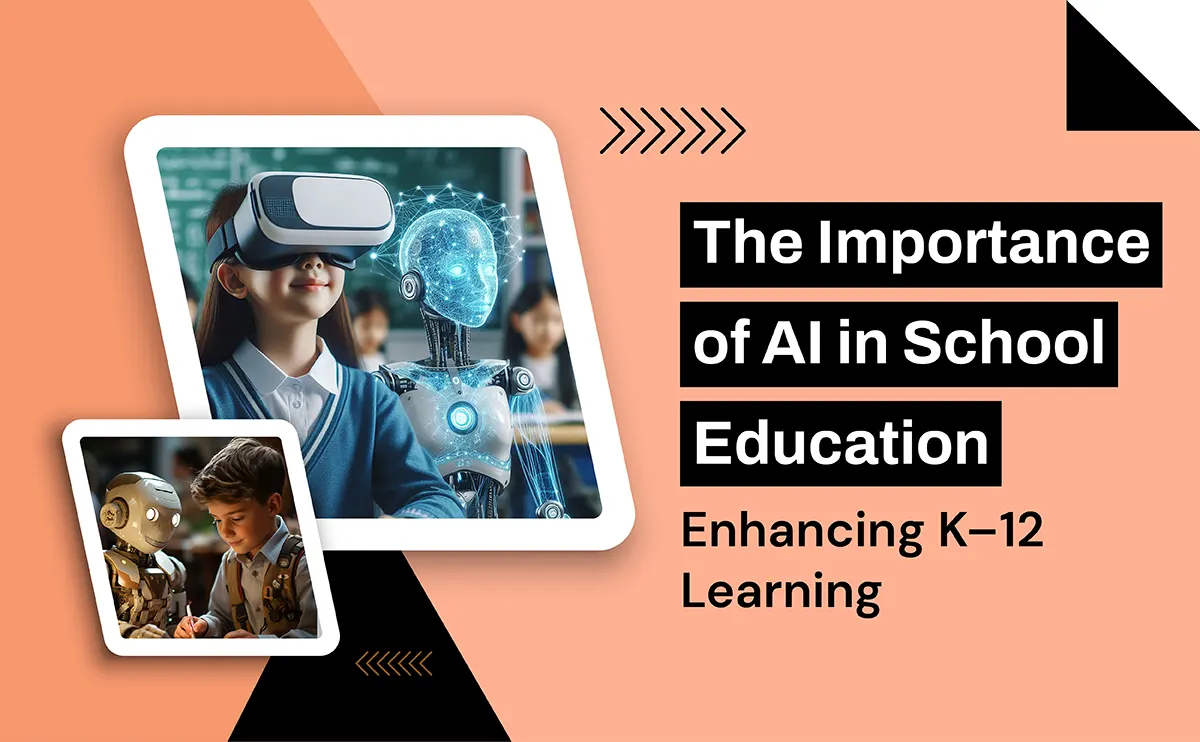
Artificial Intelligence (AI) in education refers to the use of smart computer systems that can think, learn, and make decisions to help students and teachers in schools. These technologies are becoming increasingly important in K–12 education because they can personalise learning experiences, making education more engaging and effective for every student. Understanding the importance of AI in education is essential today because technology is rapidly changing how we learn and teach.
The artificial intelligence in education sector supports both students by providing customised learning paths and instant feedback, and teachers by helping with lesson planning, grading, and classroom management tasks that traditionally took hours to complete.
- ▪ Why Is AI Important in K–12 Education?
- ▪ Benefits of Artificial Intelligence in Education
- ▪ Importance of AI in Education for Students
- ▪ Importance of AI in Education for Teachers
- ▪ Role of Artificial Intelligence in Modern Classrooms
- ▪ Pros and Cons of Artificial Intelligence in Education
- ▪ The Future of AI in Education
- ▪ Conclusion
- ▪ FAQs
Why Is AI Important in K–12 Education?
AI is revolutionising K–12 education by making learning more personalised and effective for each student. Unlike traditional teaching methods where everyone learns the same way, AI can adapt to different learning styles, speeds, and preferences. This means a student who learns better through visual aids can receive more images and videos, whilst another who prefers reading can get text-based materials. The importance of AI in education becomes clear when we see how it addresses individual learning needs.
The significance of artificial intelligence in education lies in its ability to analyse how students learn and provide customised content accordingly. For example, if a student struggles with maths, AI can identify specific areas of difficulty and provide additional practice problems or alternative explanations. This personalised approach helps students understand concepts better and progress at their own pace. The importance of AI in education is further highlighted by how it enhances curriculum delivery.
AI enhances curriculum delivery by making it more interactive and engaging. Smart educational platforms can present information in multiple formats, use gamification to make learning fun, and provide real-time feedback. This keeps students motivated and helps them stay focused on their studies. The importance of AI in education is evident in how it transforms traditional teaching methods.
Furthermore, AI helps teachers understand their students better through data analysis. It can track student progress, identify learning gaps, and suggest appropriate interventions. This data-driven approach ensures that no student falls behind and that each child receives the support they need to succeed academically, demonstrating the importance of AI in education in creating inclusive learning environments.
Benefits of Artificial Intelligence in Education
The integration of AI in education brings numerous advantages that transform the learning experience for students and teaching experience for educators. Understanding the importance of AI in education helps us appreciate these transformative benefits of artificial intelligence in education:
- Enhanced personalisation: AI creates unique learning experiences for each student by adapting content difficulty, presentation style, and pacing according to individual needs. This ensures that advanced students aren’t bored whilst struggling students receive extra support.
- Improved accessibility: AI tools can convert text to speech for students with reading difficulties, provide language translation for non-native speakers, and offer alternative formats for students with disabilities. This makes education more inclusive and accessible to all learners.
- Instant feedback and assessment: Students no longer have to wait days or weeks for test results. AI can provide immediate feedback on assignments, quizzes, and projects, helping students learn from their mistakes quickly and effectively.
- 24/7 learning support: Ai-powered tutoring systems are available round the clock, allowing students to get help with homework or clarify doubts anytime, even outside school hours.
- Data-driven insights: AI analyses vast amounts of learning data to identify patterns, predict student performance, and suggest improvements. This helps schools make informed decisions about curriculum and teaching strategies.
- Cost-effective education: AI reduces the need for additional human resources whilst providing quality education to more students. This makes quality education more affordable and accessible.
- Preparation for future careers: Exposure to AI technologies in school helps students develop digital literacy skills essential for future careers in an increasingly technology-driven world. The importance of AI in education extends beyond current learning to future career preparation.
Importance of AI in Education for Students

AI significantly transforms how students learn by making education more engaging, personalised, and effective. The Importance of AI in Education for Students becomes clear when we examine the key ways AI benefits learners:
- Faster learning: Adaptive learning systems adjust content difficulty based on your performance – if you understand quickly, you get harder challenges; if you need help, you get extra practice and explanations.
- Instant feedback: Get immediate responses to your work, allowing you to correct mistakes and understand concepts better without waiting days for teacher evaluation.
- Interactive and fun learning: AI keeps you engaged through educational games, interactive content, and multimedia presentations that make even boring subjects interesting and enjoyable.
- Support for all learning styles: Whether you learn better through videos, reading, or hands-on activities, AI can provide content in multiple formats and adjust to your specific needs.
- Real-world skills development: AI presents real-world scenarios and interactive simulations that help you develop critical thinking and problem-solving skills for future challenges.
The importance of AI in education is particularly evident in how it creates personalised learning journeys that adapt to each student’s unique needs and pace.
Importance of AI in Education for Teachers
AI serves as a powerful assistant to teachers, helping them become more effective educators whilst reducing their workload. The Importance of AI in Education for Teachers is demonstrated through how AI transforms teaching practices:
- Automated lesson planning: AI suggests curriculum content, creates lesson plans, and recommends teaching strategies based on student needs and learning objectives.
- Quick assessment and grading: AI tools automatically grade multiple-choice questions, essays, and complex assignments, saving teachers countless hours for more meaningful student interactions.
- Better classroom management: AI tracks student behaviour, identifies potential issues before they escalate, and suggests intervention strategies for a positive learning environment.
- Reduced administrative work: Tasks like attendance tracking, progress reporting, and parent communication become automated, giving teachers more time for actual teaching.
- Professional development support: AI analyses teaching effectiveness, suggests improvements, and provides personalised training recommendations to help teachers improve their skills.
- Early student support: Predictive analytics help identify struggling students early, allowing for timely intervention so no child falls behind.
The importance of AI in education extends to empowering teachers with tools that enhance their effectiveness while reducing administrative burden, allowing them to focus on what they do best – teaching and inspiring students.
Also Read: Importance of Books in Our Life
Role of Artificial Intelligence in Modern Classrooms
AI has become an integral part of modern classrooms, transforming traditional teaching methods into dynamic, interactive learning experiences. The role of artificial intelligence in education is evident in these key AI technologies in today’s classrooms:
a) Smart assistants: Voice-activated devices help students access information quickly, answer questions, and provide explanations on various topics, making learning more conversational and natural.
b) AI tutors: Virtual tutors work with students individually, providing personalised instruction, answering questions, and offering practice problems 24/7, adapting their teaching style to match each student’s preferences.
c) Predictive analytics: AI analyses student data to predict future performance, identify potential dropouts, and suggest interventions, helping schools provide targeted support.
d) Interactive whiteboards: Ai-powered boards recognise handwriting, respond to voice commands, and display content from multiple sources simultaneously for more engaging collaborative experiences.
e) Learning management systems: Ai-powered platforms track student progress, suggest resources, and facilitate communication between teachers, students, and parents, creating a comprehensive learning ecosystem.
f) Virtual and augmented reality: Ai-powered VR/AR experiences transport students to different time periods, countries, or even inside the human body, making abstract concepts tangible and memorable.
The importance of AI in education is clearly demonstrated through these technological innovations that create more engaging and effective learning environments for all students.
Pros and Cons of Artificial Intelligence in Education
Understanding the pros and cons of artificial intelligence in education helps schools make informed decisions about implementing AI technologies. The importance of AI in education becomes clearer when we examine both the benefits and challenges:
Advantages of AI in Education:
AI brings remarkable benefits to the educational landscape, transforming how students learn and teachers teach:
- Personalised Learning: Provides customised learning experiences tailored to each student’s needs, learning style, and pace, helping students understand concepts better and achieve improved academic outcomes.
- Instant Feedback: Offers immediate responses to student work, allowing them to learn from mistakes immediately rather than waiting for teacher evaluation.
- Cost-Effectiveness: Provides quality education to large numbers of students without proportionally increasing human resources, making education more affordable.
- 24/7 Availability: Ensures round-the-clock learning support, making education more accessible anytime, anywhere.
- Teacher Efficiency: Automates routine tasks like grading and attendance, allowing educators to focus on creative teaching and meaningful student interaction.
- Data-Driven Insights: Provides valuable analytics that help schools make informed decisions about curriculum and teaching strategies.
Disadvantages of AI in Education:
Despite its benefits, AI in education also presents several challenges that schools must carefully consider:
- High Implementation Costs: The initial investment in AI systems can be prohibitive for many schools, especially those with limited budgets.
- Technical Issues: System failures and technical problems can disrupt learning and cause frustration for both students and teachers.
- Privacy Concerns: Collection and storage of student data raises questions about data security and appropriate use of personal information.
- Over-Dependence Risk: Excessive reliance on technology might reduce human interaction and critical thinking skills development.
- Potential Bias: AI systems may contain biases that could unfairly advantage or disadvantage certain groups of students.
- Lack of Emotional Intelligence: AI cannot provide the empathy and emotional support that students sometimes need from human teachers.
The importance of AI in education must be balanced against these challenges to ensure successful implementation that benefits all learners.
The Future of AI in Education
The future of AI in education looks incredibly promising, with emerging technologies set to revolutionise how we learn and teach. Virtual and augmented reality will become more common, creating immersive learning experiences that transport students to ancient civilisations, inside molecules, or to distant planets. The importance of AI in education will continue to grow as these technologies become more sophisticated.
AI will become even more sophisticated in understanding student emotions and mental states, providing appropriate support and motivation. Emotional AI will help identify when students are frustrated, bored, or engaged, allowing for real-time adjustments to learning content and pace. The importance of AI in education will expand to include emotional and mental health support for students.
Blockchain technology integrated with AI will create secure, verifiable digital credentials and certificates, making it easier for students to demonstrate their skills and knowledge to future employers or universities. The AI in education sector will become more interconnected and globally recognised.
AI will also enable more collaborative learning experiences, connecting students from different schools, countries, and cultures for shared projects and learning experiences. This global classroom approach will prepare students for an interconnected world. The importance of AI in education extends to creating global learning communities.
The development of quantum computing will make AI even more powerful, enabling complex simulations and problem-solving activities that are currently impossible. This will open new possibilities for scientific education and research. The importance of artificial intelligence in education will reach new heights with these technological advances.
However, the future will also require careful consideration of ethical issues, digital equity, and the need to maintain human connections in education whilst embracing technological advancement.
Conclusion
The importance of AI in education cannot be overstated as it fundamentally transforms how students learn and teachers teach. From personalised learning experiences to automated administrative tasks, AI enhances every aspect of K–12 education.
The benefits for students include faster learning, instant feedback, and improved accessibility, whilst teachers benefit from reduced workload and better insights into student progress. Modern classrooms are already seeing the positive impact of AI tutors, smart assistants, and predictive analytics.
Whilst there are challenges to consider, including costs and privacy concerns, the importance of AI in education continues to grow as technology advances. Educators must embrace AI tools responsibly, ensuring they complement rather than replace human interaction and creativity.
By understanding and implementing AI thoughtfully, schools can create more effective, engaging, and inclusive learning environments that prepare students for success in an increasingly digital world. The importance of AI in education will only continue to expand as we move towards a more technologically integrated future.
FAQs
Is AI safe for young students to use in schools?
Yes, when properly implemented with appropriate safeguards, AI tools designed for education are safe for students. Schools must ensure data privacy and age-appropriate content.
Will AI replace human teachers?
No, AI is designed to assist teachers, not replace them. Human teachers provide emotional support, creativity, and personal connections that AI cannot replicate.
How expensive is it to implement AI in schools?
Costs vary widely depending on the scale and type of AI tools chosen. Many affordable options exist, and long-term benefits often justify initial investments.
Can AI help students with learning disabilities?
Absolutely! AI can provide personalised support, alternative content formats, and adaptive learning paths that specifically address different learning needs and disabilities.
