



Importance of Books in Our Life


Even in an age dominated by smartphones, tablets, and online learning, the importance of books in our lives remains unchanged. From school textbooks to storybooks and reference materials, books continue to play a key role in shaping young minds. For students, books are more than just a source of academic information—they are companions that support learning, spark imagination, and nurture emotional growth.
Whether preparing for exams or exploring new ideas, reading helps students build focus, improve vocabulary, and boost confidence. Books also promote empathy and patience, helping children understand different perspectives and cultures. While technology offers speed and convenience, books offer depth and reflection—qualities essential for real learning and growth.
This blog explores the importance of books in our life and how they contribute to both academic success and personal development. We’ll also look at the advantages of books, the importance of books in our life, and why they continue to matter even in the age of smartphones and AI. Whether you’re a student, parent, or teacher, understanding the power of books can help you make better choices for lifelong learning.
- ▪ Top Benefits of Reading Books for Students
- ▪ Books: The Most Loyal Friend a Student Can Have
- ▪ How Books Spark Creativity and Imagination
- ▪ Books Expand Your Perspective and Worldview
- ▪ How Books Boost Self-Esteem and Confidence
- ▪ Books and Holistic Growth: Mental, Emotional, and Moral Development
- ▪ Life Lessons Every Student Can Learn from Books
- ▪ Essay on the Importance of Books in Our Life
- ▪ Essay on the Importance of Reading
- ▪ Inspirational Quotes on the Importance of Books
- ▪ Famous Quotes About the Power of Reading
- ▪ FAQs
Top Benefits of Reading Books for Students
Books offer countless benefits that go far beyond the classroom. For students, reading books regularly can lead to better learning outcomes and stronger life skills. Below are some of the top advantages of books in a student’s life:
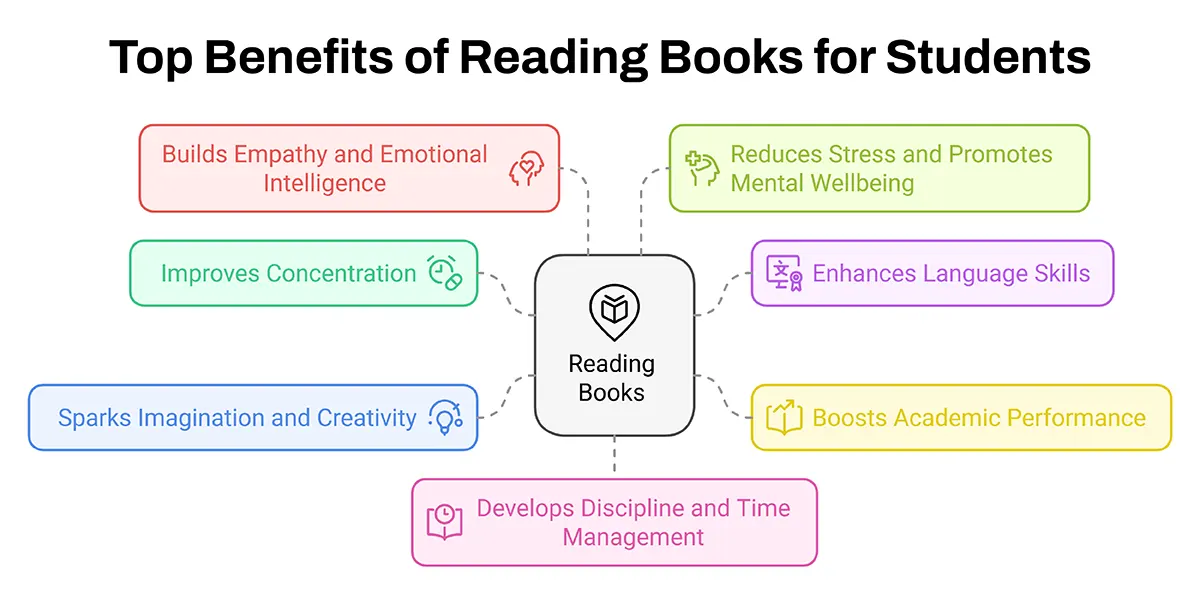
1. Improves Concentration
Reading books requires focus and attention. Unlike scrolling through a screen, reading helps students develop the habit of sitting still and absorbing information carefully. This improved concentration benefits them during exams, lectures, and study sessions.
2. Enhances Language Skills
Books introduce students to new words, phrases, and sentence structures. Whether it’s a textbook or a storybook, every page read adds to a student’s vocabulary and grammar. This leads to clearer writing, better speaking skills, and improved performance in language-based subjects.
3. Boosts Academic Performance
The importance of reading books becomes clear in academics. Reading improves memory and comprehension—skills that are essential for scoring well in subjects like Science, History, and English. Students who read regularly tend to perform better in exams and assignments.
4. Sparks Imagination and Creativity
Storybooks, novels, and even biographies allow students to explore new ideas and places. Reading stimulates the imagination and helps children think creatively. It encourages them to visualise scenes, solve problems, and build original thoughts.
5. Builds Empathy and Emotional Intelligence
Books let students experience different cultures, emotions, and viewpoints. This helps build empathy—an important life skill. Reading about characters dealing with challenges teaches compassion and makes students more understanding and emotionally mature.
6. Reduces Stress and Promotes Mental Wellbeing
Books offer an escape from everyday stress. Reading can calm the mind and reduce anxiety, helping students relax and feel better, especially during exam pressure or emotional challenges.
7. Develops Discipline and Time Management
Maintaining a reading habit teaches students how to manage time wisely. Setting aside time each day to read builds discipline, which is useful for managing studies and responsibilities.
Also Read: Ambedkar Quotes on Education: Get 30+ Inspiring Quotes for Students
Books: The Most Loyal Friend a Student Can Have
Books are more than just pages and print—they are loyal friends that never leave your side. While friendships may change and people may come and go, a good book remains constant. It is always ready to comfort you, teach you something new, or simply offer company when you are alone.
Imagine a student feeling anxious before an exam. A trusted textbook, read thoroughly and patiently, becomes a quiet source of confidence. Or think of a young child curled up with a favourite storybook after a tough day—finding joy, hope, and peace in its pages. This is the magic of books.
Books guide students like mentors. They offer advice during difficult times, open doors to new ideas, and silently shape character. They don’t judge, don’t interrupt, and never grow tired of being read again and again.
This emotional connection is what makes books such powerful companions. They truly prove the importance of books in our life, not just for school, but for the heart.
How Books Spark Creativity and Imagination
Books have a unique way of opening the doors of creativity and imagination, especially for students. When you read a fantasy novel or a science fiction story, your mind travels beyond everyday life into worlds filled with magic, mystery, and endless possibilities. This imaginative journey helps students think outside the box.
Fiction and storytelling genres are especially powerful. They teach students to visualise scenes, characters, and situations. This visual thinking supports the development of new ideas and enhances problem-solving skills. For example, when a student reads about a hero overcoming challenges, they learn to approach real-life problems with courage and creativity.
Books also help improve storytelling skills. A child who reads often can create their own stories, use rich vocabulary, and express thoughts more clearly. This builds confidence and boosts writing abilities.
Whether it’s a fairy tale or a detective novel, each book adds new colours to a student’s imagination. That’s why the importance of reading books goes far beyond academics—it helps build a mind that is curious, creative, and full of ideas.
Books Expand Your Perspective and Worldview
Books are like windows to the world. They let students explore new cultures, beliefs, traditions, and ideas that go far beyond their daily lives. When students read stories from other countries or historical books about different eras, they begin to understand how people live, think, and feel in different parts of the world. This broadens their worldview and helps them become more accepting and open-minded.
For example, a student reading about Japan’s culture, Africa’s history, or Europe’s revolutions learns more than just facts—they gain understanding and empathy. Non-fiction books, travel accounts, biographies, and global literature are excellent tools to open a student’s mind. These books introduce new values, inspire curiosity, and teach respect for diversity.
This is why books are important—not just for passing exams, but for shaping students into global citizens. The importance of books in our life lies in their power to challenge fixed ideas and encourage students to think deeply and see the world with fresh eyes. Books make students more aware, thoughtful, and respectful of others.
Also Read: SWOT Analysis Examples for Students
How Books Boost Self-Esteem and Confidence
Reading helps students build more than just knowledge—it builds inner strength and confidence. When a student reads regularly, they improve their understanding of language. This makes it easier to express thoughts clearly and speak without hesitation during classroom discussions, group projects, or even public speaking.
Well-read students often perform better in school. They write better essays, ask smarter questions, and feel confident when answering in class. This boosts their self-esteem. Books also expose them to different ways of thinking, which helps improve their decision-making skills. Whether it’s preparing for a school debate or writing a speech, the advantages of books are easy to see.
Books also share powerful stories of struggle, hope, and courage. Reading about real-life leaders, scientists, or even fictional heroes shows students that challenges can be overcome. This builds their belief in themselves. It teaches them that with effort and learning, they too can succeed.
The importance of books in our life is clearly seen in how they shape a student’s voice, confidence, and personality. Books quietly empower students to stand tall, speak clearly, and trust their own ideas.
Books and Holistic Growth: Mental, Emotional, and Moral Development
Books play a key role in shaping a student’s overall development. They do not just make a student academically strong but also help them grow emotionally, mentally, and morally. Reading regularly builds mental focus. Students who read daily tend to concentrate better, stay calm under pressure, and think clearly while solving problems.
Emotionally, books help students understand feelings better. When they read about a character’s journey through sadness, joy, or fear, they connect emotionally. This improves their ability to understand others, making them more kind, patient, and empathetic. Books teach emotional balance, which helps students handle friendship issues, peer pressure, or academic stress more calmly.
Morally, books like fables, autobiographies, and cultural stories teach life values, like honesty, respect, fairness, and kindness. These lessons guide students in making the right choices in real life. Stories of freedom fighters, scientists, or social workers inspire a strong sense of purpose and integrity.
The importance of reading books lies in how they shape a student’s entire personality. From building emotional strength to moral values, books nurture students to become better human beings. Whether it’s fiction, self-help, or history, every book adds value to one’s life.
That’s why the importance of books in our life is not limited to exams—it’s about becoming a balanced and thoughtful person.
Life Lessons Every Student Can Learn from Books
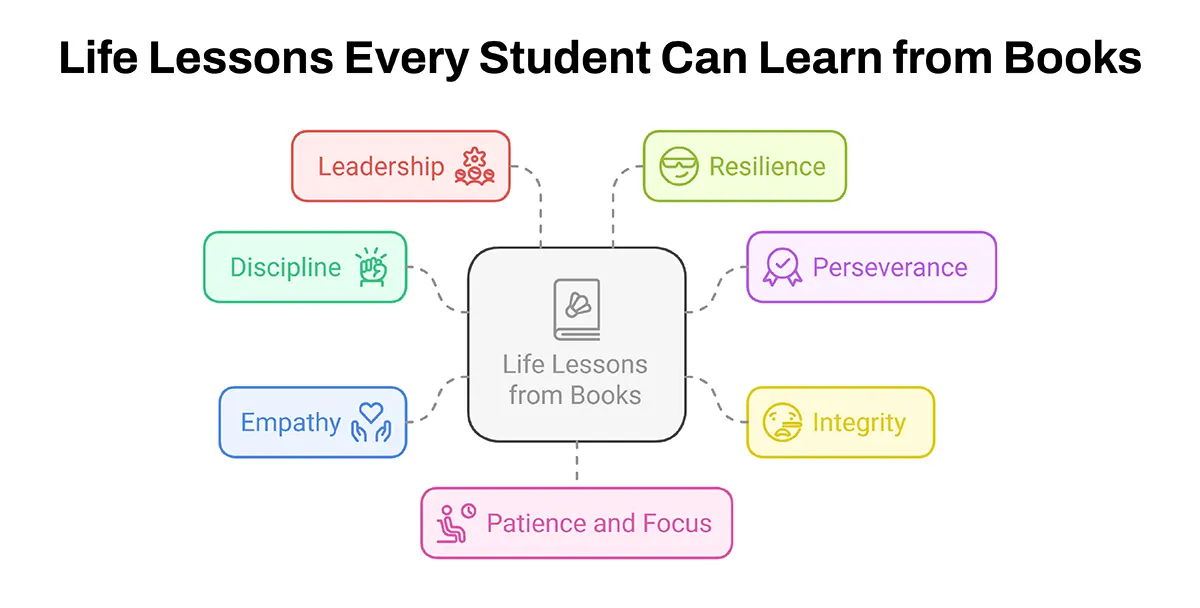
Books are one of the best teachers in life. They quietly teach students values and life skills that stay with them forever. Here’s a look at some timeless lessons every student can learn from reading:
- Discipline: Developing a reading habit trains students to manage their time and stick to routines. This discipline also helps with studies and goals.
- Perseverance: Books often feature characters or real people who never gave up. Reading these stories inspires students to keep trying even when they fail.
- Integrity: Many stories show how staying honest and true to oneself leads to long-term success. These ideas shape a strong moral character.
- Empathy: Fiction, especially emotional stories, teaches students to understand other people’s feelings and viewpoints.
- Leadership: Biographies of great leaders and changemakers help students learn decision-making, responsibility, and courage.
- Resilience: Books show how challenges are a part of life and how people rise above them. This gives students the mental strength to face setbacks.
- Patience and Focus: Reading trains the brain to slow down, reflect, and absorb information—skills vital in today’s fast world.
From self-help books to classic literature, the lessons are endless. The importance of books in our life goes far beyond academics. These lessons shape strong, kind, and smart individuals. That’s the true importance of books in our life—they prepare students for both school and life.
Essay on the Importance of Books in Our Life
The importance of books in our life is undeniable, especially for students who are shaping their knowledge, values, and personalities. Books are more than just pages filled with information; they are powerful tools that support academic success, personal development, and emotional strength. From classroom textbooks to inspiring novels, books guide students through every stage of growth.
Books improve focus and discipline. When a student sits down to read, they train their mind to concentrate for longer periods, which helps them stay attentive during lectures and exams. Another reason behind the importance of books in our life is their ability to improve language skills. Reading builds vocabulary, enhances grammar, and helps students express their thoughts more clearly—skills that are essential in both academics and daily life.
The importance of books in our life also lies in how they spark creativity and imagination. Fiction, fantasy, and storytelling genres open new worlds for students, encouraging them to think beyond the obvious. Such reading nurtures problem-solving skills and original thinking, which are vital in today’s fast-changing world. These are not just the advantages of books—they are life-changing habits that continue to benefit learners throughout life.
Books also shape moral and emotional intelligence. By reading biographies, self-help books, or historical accounts, students learn values like integrity, empathy, and perseverance. These lessons help them understand the world better and become responsible citizens. This is especially relevant in today’s world, where emotional balance is just as important as academic knowledge.
In addition, books build confidence. Students who read widely are better at expressing themselves during debates, speeches, or presentations. The importance of books in our life is evident when students apply what they’ve read in real-life conversations, classroom discussions, or even personal decisions. Reading provides mental clarity and a deeper understanding of people and situations.
In conclusion, the importance of books in our life goes far beyond academics. Books are lifelong companions that educate, comfort, and inspire us. Every student should make reading a regular habit—not just for exams but for a richer, more meaningful life.
Essay on the Importance of Reading
Reading is one of the most powerful habits a person can develop. From a young age, students are taught to read, but the true value of this habit goes far beyond schoolwork. The importance of reading books lies in the way they shape our thinking, improve our focus, and help us grow as individuals. Reading regularly is a simple yet effective way to train the brain and become a lifelong learner.
One of the key advantages of books is how they improve concentration and mental discipline. When we read every day, our ability to focus increases. This helps students pay better attention in class and boosts memory and comprehension. Whether it’s a textbook, novel, or newspaper, reading builds the habit of learning and thinking deeply.
Another reason why books are important is their impact on vocabulary and language skills. Students who read often find it easier to write essays, answer questions, and speak fluently. Reading also teaches us to think critically and understand different viewpoints. Fiction, biographies, and self-help books help readers build empathy and emotional intelligence.
The importance of reading books is not just for students—it continues throughout life. People who read are often better decision-makers, more informed, and more open-minded. Reading also reduces stress and promotes better sleep when done regularly.
In conclusion, reading is more than just a school activity. It is a valuable habit that supports academic success, personal growth, and emotional well-being. Everyone should try to read something every day—even if it’s just for a few minutes. It’s a small step that leads to big changes over time.
Inspirational Quotes on the Importance of Books
Books have inspired generations of learners and thinkers. Below are some timeless quotes that reflect the importance of books in our life.
1. “A room without books is like a body without a soul.” – Marcus Tullius Cicero
→ Books bring meaning and depth to life.
2. “Books are a uniquely portable magic.” – Stephen King
→ They transport us to other worlds without moving an inch.
3. “Books are the quietest and most constant of friends.” – Charles W. Eliot
→ A reminder of how loyal books can be.
4. “A book is a dream that you hold in your hand.” – Neil Gaiman
→ Books turn imagination into reality.
5. “There is no friend as loyal as a book.” – Ernest Hemingway
→ Books stay by your side even in solitude.
6. “Books train your imagination to think big.” – Taylor Swift
→ Especially relevant for young dreamers.
7. “The reading of all good books is like conversation with the finest minds.” – Descartes
→ Books connect us with brilliant thinkers.
8. “A book is a gift you can open again and again.” – Garrison Keillor
→ Knowledge and joy that never expire.
9. “Books give a soul to the universe, wings to the mind, and life to everything.” – Plato
→ Captures the power of books in shaping life.
10. “Books are the carriers of civilisation.” – Barbara Tuchman
→ They preserve and pass on human wisdom.
To truly succeed and grow, we must never forget the importance of books in our life.
Famous Quotes About the Power of Reading
Reading builds minds and changes lives. Here are some powerful quotes about the importance of books in our life, especially meaningful for students:
1. “Let us remember: One book, one pen, one child, and one teacher can change the world.” – Malala Yousafzai
2. “The more that you read, the more things you will know. The more that you learn, the more places you’ll go.” ― Dr. Seuss
3. “A reader lives a thousand lives before he dies. The man who never reads lives only one.” – George R.R. Martin
4. “Any book that helps a child to form a habit of reading, to make reading one of his needs, is good for him.” —Maya Angelou
5. “Books break the shackles of time—proof that humans can work magic.” – Carl Sagan
6. “Once you learn to read, you will be forever free.” – Frederick Douglass
7. “Reading is essential for those who seek to rise above the ordinary.” – Jim Rohn
8. “Reading furnishes the mind only with materials of knowledge.” – John Locke
Books are a treasure that never grows old. They hold the wisdom of the world, wrapped in pages and ink. Whether you are preparing a short essay on books, writing the importance of reading books essay, or delivering the importance of books in our life speech, these quotes can be value-adding, highlighting the message: reading books can change your life.
FAQs
What is the importance of books in our life as students?
Books help students learn better, improve focus, build vocabulary, and score well on exams. They also shape thinking and values.
How do books help in personal growth?
Books teach life lessons like empathy, discipline, and honesty. They help us understand people and situations better.
Can reading improve confidence in students?
Yes, regular reading improves speaking and writing skills, which boosts confidence in school activities like debates and presentations.
Why should students read every day?
Daily reading develops discipline, memory, creativity, and helps students learn new things regularly.
How do books support emotional development?
The importance of books in our life is also emotional—they help manage stress, offer comfort, and build empathy by connecting us to different characters and experiences.
Why is understanding the importance of books in our life essential in the digital age?
Even with smartphones and the internet, books remain valuable. They offer deep knowledge, reduce screen time, and improve focus, making them essential for balanced learning.


