



Multiplication Tables from 1 to 20 for Kids


Multiplication tables are special charts that help children learn how to multiply numbers quickly and easily. These tables are incredibly important because they form the foundation of all mathematics learning. When children master multiplication tables from 1 to 20, they build confidence in solving maths problems, make calculations faster, and develop a strong understanding of number patterns.
In this comprehensive guide, you’ll discover everything about multiplication tables from 1 to 20, including easy memorisation techniques, helpful charts, practical tips, and solved examples that will make learning multiplication enjoyable.
Multiplication Tables from 1 to 20
Multiplication tables from 1 to 20 are systematic arrangements showing the results of multiplying numbers from 1 to 20 with other numbers. These maths tables 1 to 20 serve as essential building blocks for developing strong mathematical skills in children. When students master multiplication table 1 to 20, they can tackle complex mathematical problems, making their overall retention better.
Must Buy: Children Books
Table of 1 to 5
The multiplication tables from 1 to 5 form the foundation of all mathematical learning and are the easiest tables for children to master. These tables introduce basic multiplication concepts through simple, recognisable patterns that young minds can easily grasp and remember.
| Table of 1 | Table of 2 | Table of 3 | Table of 4 | Table of 5 |
| 1 × 1 = 1 | 2 × 1 = 2 | 3 × 1 = 3 | 4 × 1 = 4 | 5 × 1 = 5 |
| 1 × 2 = 2 | 2 × 2 = 4 | 3 × 2 = 6 | 4 × 2 = 8 | 5 × 2 = 10 |
| 1 × 3 = 3 | 2 × 3 = 6 | 3 × 3 = 9 | 4 × 3 = 12 | 5 × 3 = 15 |
| 1 × 4 = 4 | 2 × 4 = 8 | 3 × 4 = 12 | 4 × 4 = 16 | 5 × 4 = 20 |
| 1 × 5 = 5 | 2 × 5 = 10 | 3 × 5 = 15 | 4 × 5 = 20 | 5 × 5 = 25 |
| 1 × 6 = 6 | 2 × 6 = 12 | 3 × 6 = 18 | 4 × 6 = 24 | 5 × 6 = 30 |
| 1 × 7 = 7 | 2 × 7 = 14 | 3 × 7 = 21 | 4 × 7 = 28 | 5 × 7 = 35 |
| 1 × 8 = 8 | 2 × 8 = 16 | 3 × 8 = 24 | 4 × 8 = 32 | 5 × 8 = 40 |
| 1 × 9 = 9 | 2 × 9 = 18 | 3 × 9 = 27 | 4 × 9 = 36 | 5 × 9 = 45 |
| 1 × 10 = 10 | 2 × 10 = 20 | 3 × 10 = 30 | 4 × 10 = 40 | 5 × 10 = 50 |
Table of 6 to 10
Tables from 6 to 10 build upon the foundation established by the earlier tables whilst introducing slightly more complex number relationships. These intermediate tables help children develop stronger multiplication skills and prepare them for more advanced mathematical concepts.
| Table of 6 | Table of 7 | Table of 8 | Table of 9 | Table of 10 |
| 6 × 1 = 6 | 7 × 1 = 7 | 8 × 1 = 8 | 9 × 1 = 9 | 10 × 1 = 10 |
| 6 × 2 = 12 | 7 × 2 = 14 | 8 × 2 = 16 | 9 × 2 = 18 | 10 × 2 = 20 |
| 6 × 3 = 18 | 7 × 3 = 21 | 8 × 3 = 24 | 9 × 3 = 27 | 10 × 3 = 30 |
| 6 × 4 = 24 | 7 × 4 = 28 | 8 × 4 = 32 | 9 × 4 = 36 | 10 × 4 = 40 |
| 6 × 5 = 30 | 7 × 5 = 35 | 8 × 5 = 40 | 9 × 5 = 45 | 10 × 5 = 50 |
| 6 × 6 = 36 | 7 × 6 = 42 | 8 × 6 = 48 | 9 × 6 = 54 | 10 × 6 = 60 |
| 6 × 7 = 42 | 7 × 7 = 49 | 8 × 7 = 56 | 9 × 7 = 63 | 10 × 7 = 70 |
| 6 × 8 = 48 | 7 × 8 = 56 | 8 × 8 = 64 | 9 × 8 = 72 | 10 × 8 = 80 |
| 6 × 9 = 54 | 7 × 9 = 63 | 8 × 9 = 72 | 9 × 9 = 81 | 10 × 9 = 90 |
| 6 × 10 = 60 | 7 × 10 = 70 | 8 × 10 = 80 | 9 × 10 = 90 | 10 × 10 = 100 |
The table of 9 has a particularly interesting pattern where the digits of each answer add up to 9, whilst the table of 10 is remarkably simple as it just adds a zero to any number.
Table of 11 to 15
Multiplication tables from 11 to 15 introduce children to larger numbers whilst maintaining recognisable patterns that make memorisation manageable.
| Table of 11 | Table of 12 | Table of 13 | Table of 14 | Table of 15 |
| 11 × 1 = 11 | 12 × 1 = 12 | 13 × 1 = 13 | 14 × 1 = 14 | 15 × 1 = 15 |
| 11 × 2 = 22 | 12 × 2 = 24 | 13 × 2 = 26 | 14 × 2 = 28 | 15 × 2 = 30 |
| 11 × 3 = 33 | 12 × 3 = 36 | 13 × 3 = 39 | 14 × 3 = 42 | 15 × 3 = 45 |
| 11 × 4 = 44 | 12 × 4 = 48 | 13 × 4 = 52 | 14 × 4 = 56 | 15 × 4 = 60 |
| 11 × 5 = 55 | 12 × 5 = 60 | 13 × 5 = 65 | 14 × 5 = 70 | 15 × 5 = 75 |
| 11 × 6 = 66 | 12 × 6 = 72 | 13 × 6 = 78 | 14 × 6 = 84 | 15 × 6 = 90 |
| 11 × 7 = 77 | 12 × 7 = 84 | 13 × 7 = 91 | 14 × 7 = 98 | 15 × 7 = 105 |
| 11 × 8 = 88 | 12 × 8 = 96 | 13 × 8 = 104 | 14 × 8 = 112 | 15 × 8 = 120 |
| 11 × 9 = 99 | 12 × 9 = 108 | 13 × 9 = 117 | 14 × 9 = 126 | 15 × 9 = 135 |
| 11 × 10 = 110 | 12 × 10 = 120 | 13 × 10 = 130 | 14 × 10 = 140 | 15 × 10 = 150 |
Table of 11 shows a unique pattern where multiplying by single digits creates repeating numbers (11 × 2 = 22, 11 × 3 = 33), making it particularly memorable for children.
Table of 16 to 20
The multiplication tables from 16 to 20 represent the final and most challenging group in this comprehensive learning journey.
| Table of 16 | Table of 17 | Table of 18 | Table of 19 | Table of 20 |
| 16 × 1 = 16 | 17 × 1 = 17 | 18 × 1 = 18 | 19 × 1 = 19 | 20 × 1 = 20 |
| 16 × 2 = 32 | 17 × 2 = 34 | 18 × 2 = 36 | 19 × 2 = 38 | 20 × 2 = 40 |
| 16 × 3 = 48 | 17 × 3 = 51 | 18 × 3 = 54 | 19 × 3 = 57 | 20 × 3 = 60 |
| 16 × 4 = 64 | 17 × 4 = 68 | 18 × 4 = 72 | 19 × 4 = 76 | 20 × 4 = 80 |
| 16 × 5 = 80 | 17 × 5 = 85 | 18 × 5 = 90 | 19 × 5 = 95 | 20 × 5 = 100 |
| 16 × 6 = 96 | 17 × 6 = 102 | 18 × 6 = 108 | 19 × 6 = 114 | 20 × 6 = 120 |
| 16 × 7 = 112 | 17 × 7 = 119 | 18 × 7 = 126 | 19 × 7 = 133 | 20 × 7 = 140 |
| 16 × 8 = 128 | 17 × 8 = 136 | 18 × 8 = 144 | 19 × 8 = 152 | 20 × 8 = 160 |
| 16 × 9 = 144 | 17 × 9 = 153 | 18 × 9 = 162 | 19 × 9 = 171 | 20 × 9 = 180 |
| 16 × 10 = 160 | 17 × 10 = 170 | 18 × 10 = 180 | 19 × 10 = 190 | 20 × 10 = 200 |
Also Learn: Cubes 1 to 30
Maths Tables Chart from 1 to 20
Visual multiplication charts serve as excellent reference tools that make learning more engaging and effective for children. These comprehensive 1 to 20 tables chart display all multiplication results in an organised, easy-to-read format that helps students quickly find answers and identify fascinating number patterns.
Multiplication Chart: Tables 1 to 10
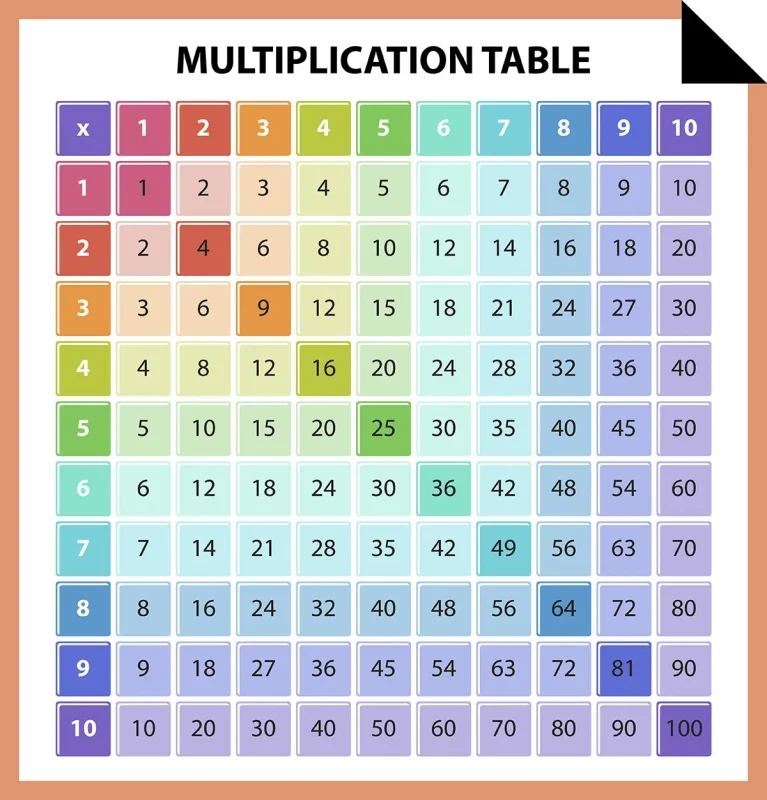
| × | 1 | 2 | 3 | 4 | 5 | 6 | 7 | 8 | 9 | 10 |
| 1 | 1 | 2 | 3 | 4 | 5 | 6 | 7 | 8 | 9 | 10 |
| 2 | 2 | 4 | 6 | 8 | 10 | 12 | 14 | 16 | 18 | 20 |
| 3 | 3 | 6 | 9 | 12 | 15 | 18 | 21 | 24 | 27 | 30 |
| 4 | 4 | 8 | 12 | 16 | 20 | 24 | 28 | 32 | 36 | 40 |
| 5 | 5 | 10 | 15 | 20 | 25 | 30 | 35 | 40 | 45 | 50 |
| 6 | 6 | 12 | 18 | 24 | 30 | 36 | 42 | 48 | 54 | 60 |
| 7 | 7 | 14 | 21 | 28 | 35 | 42 | 49 | 56 | 63 | 70 |
| 8 | 8 | 16 | 24 | 32 | 40 | 48 | 56 | 64 | 72 | 80 |
| 9 | 9 | 18 | 27 | 36 | 45 | 54 | 63 | 72 | 81 | 90 |
| 10 | 10 | 20 | 30 | 40 | 50 | 60 | 70 | 80 | 90 | 100 |
Multiplication Chart: Tables 11 to 20
| × | 11 | 12 | 13 | 14 | 15 | 16 | 17 | 18 | 19 | 20 |
| 1 | 11 | 12 | 13 | 14 | 15 | 16 | 17 | 18 | 19 | 20 |
| 2 | 22 | 24 | 26 | 28 | 30 | 32 | 34 | 36 | 38 | 40 |
| 3 | 33 | 36 | 39 | 42 | 45 | 48 | 51 | 54 | 57 | 60 |
| 4 | 44 | 48 | 52 | 56 | 60 | 64 | 68 | 72 | 76 | 80 |
| 5 | 55 | 60 | 65 | 70 | 75 | 80 | 85 | 90 | 95 | 100 |
| 6 | 66 | 72 | 78 | 84 | 90 | 96 | 102 | 108 | 114 | 120 |
| 7 | 77 | 84 | 91 | 98 | 105 | 112 | 119 | 126 | 133 | 140 |
| 8 | 88 | 96 | 104 | 112 | 120 | 128 | 136 | 144 | 152 | 160 |
| 9 | 99 | 108 | 117 | 126 | 135 | 144 | 153 | 162 | 171 | 180 |
| 10 | 110 | 120 | 130 | 140 | 150 | 160 | 170 | 180 | 190 | 200 |
Also Learn: Squares 1 to 30
Tips to Memorise Multiplication Tables 2 to 20
Learning multiplication tables from 1 to 20 effectively requires strategic approaches that make the process enjoyable and successful for children. Here are proven techniques to help young learners master 1 to 15 tables:
- Start with easier tables: Begin with tables 1, 2, 5, and 10 before progressing to more challenging ones like 7, 8, and 9.
- Use skip counting: Practice counting in multiples (2, 4, 6, 8…) to understand the pattern of each multiplication table.
- Practice daily: Download tables 1 to 20 PDF and dedicate 10-15 minutes each day to table practice rather than long, infrequent study sessions.
- Identify patterns: Look for interesting patterns in each table, such as how table 9 digits always add up to 9.
- Play multiplication games: Turn learning into fun activities with board games, online games, or family competitions.
Tables 1 to 20 Solved Examples
Here are some practical examples that demonstrate how multiplication tables from 1 to 20 work in real mathematical problems. Try solving them without seeing the answer and then crosscheck your answer.
1: What is 7 × 8?
Using the table of 7, we find that 7 × 8 = 56
2: Calculate 12 × 6
From the table of 12, we know that 12 × 6 = 72
3: Find 15 × 4
Looking at the table of 15, we see that 15 × 4 = 60
4: What is 9 × 13?
Using the table of 9, we calculate that 9 × 13 = 117
5: Calculate 18 × 5
From the table of 18, we find that 18 × 5 = 90
6: Find 11 × 12
Using the table of 11, we see that 11 × 12 = 132
7: What is 14 × 7?
Looking at the table of 14, we calculate that 14 × 7 = 98
8: Calculate 16 × 3
From the table of 16, we know that 16 × 3 = 48
9: Find 19 × 6
Using the table of 19, we see that 19 × 6 = 114
10: What is 20 × 8?
From the table of 20, we calculate that 20 × 8 = 160
FAQs on Multiplication Tables from 1 to 20
At what age should children start learning multiplication tables?
Most children begin learning multiplication tables from 1 to 20 around age 7-8, typically in class 2 or 3, when they have developed solid addition and subtraction skills and can understand the concept of repeated addition.
How long does it take to memorise all multiplication tables from 1 to 20?
With consistent daily practice of 10-15 minutes, most children can memorise tables 1-10 within 2-3 months, tables 1-12 within 3-4 months, and extend to table 20 within 5-6 months of regular practice.
Which multiplication table is considered the most challenging to learn?
Table of 7 is often considered the most difficult in tables 1 to 20 because it doesn’t follow obvious patterns like other tables, requiring more focused memorisation and practice to master completely.
What should children do if they struggle with memorising certain multiplication tables from 1 to 20?
Focus on one challenging table at a time, use visual aids and manipulatives, break the table into smaller chunks, practice with games and songs, and celebrate small victories to maintain motivation and confidence throughout the learning process.


